Posts

Thea Collision and the Anthropic Principle

Image
“If some GOD-LIKE being could be given the opportunity to plan a sequence of events with the express goal of duplicating our "Garden of Eden," that power would face a formidable task. With the best intentions, but limited by natural laws and materials, it is unlikely that Earth could ever be truly replicated. Too many processes in its formation involved sheer luck." -Peter Ward, Rare Earth Hypothesis  The Theia collision , according to the giant-impact hypothesis, is believed to be a major event that dramatically altered both the Earth and Moon billions of years ago. While the immediate aftermath wouldn't have been hospitable to life, the long-term effects of the collision may have set the stage for life to emerge on Earth. Here are some ways the Theia collision might have helped life on Earth: Formation of the Moon: The Moon stabilizes Earth's axis, reducing wobble and catastrophic climate swings. This stable climate is crucial for life as we know it...
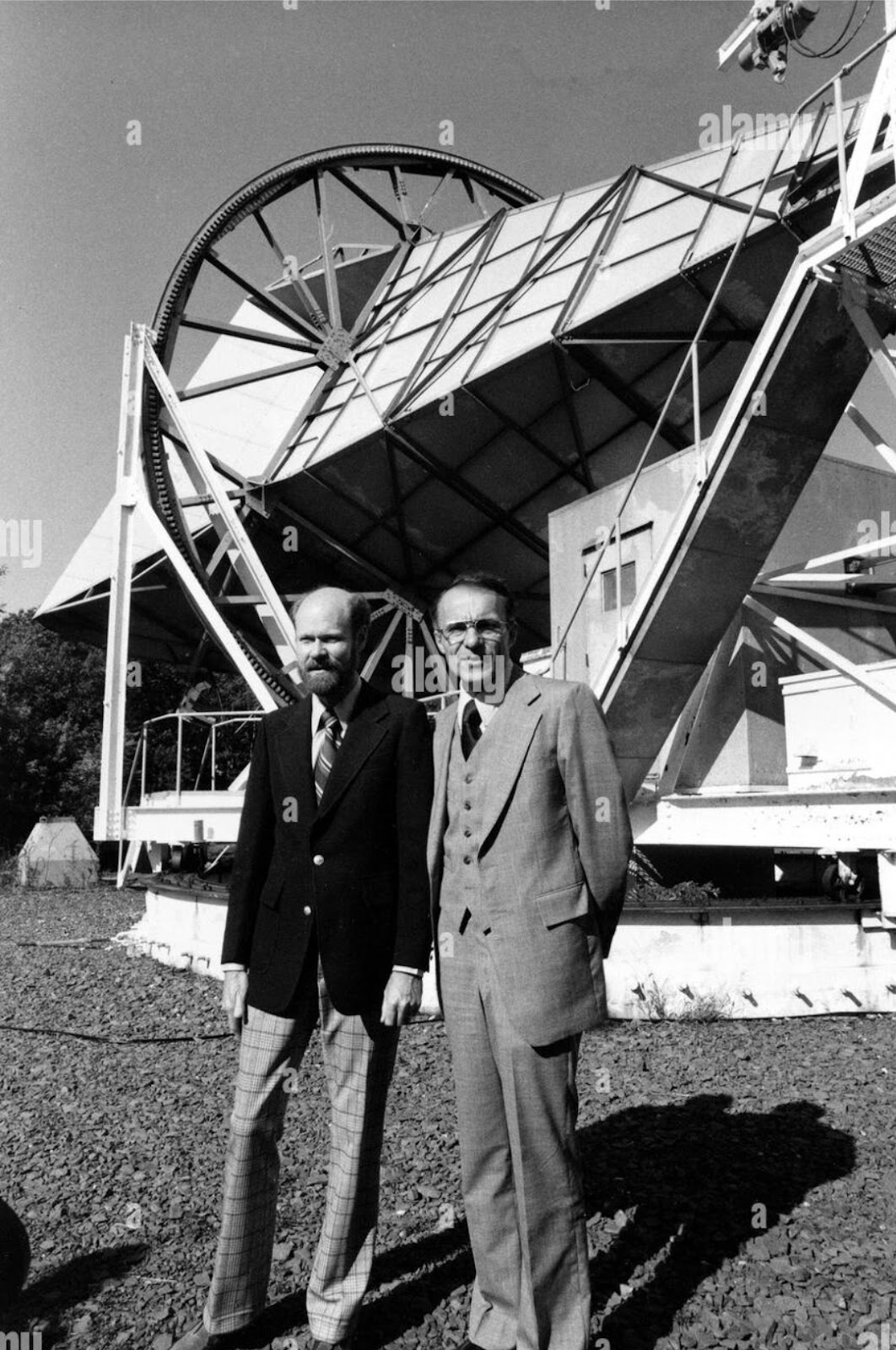
A Measurement of Excess Antenna Temperature at λ = 7.3 cm (Review)

Image
“My argument," Dr. Penzias concluded, “is that the best data we have are exactly what I would have predicted, had I had nothing to go on but the five books of Moses, the Psalms, the Bible as a whole.”- Penzius  NYT This journal entry details the measurement of excess antenna temperature at a wavelength of λ = 7.3 cm. The experiment aims to quantify the additional thermal noise experienced by the antenna beyond the inherent thermal noise of the environment. This excess temperature can be attributed to various factors, including ohmic losses in the antenna components and external sources radiating at the specific wavelength. Introduction Radio astronomy relies on the detection of faint electromagnetic signals originating from celestial objects. Sensitive antennas are employed to capture these signals, but their reception is hampered by thermal noise. This noise originates from the random thermal motion of electrons within the antenna and its surrounding environment. It m...

Unveiling the Early Universe: Bursty Star Formation and the Rise of Bright Galaxies

Image
James Webb Telescope The journal article "Bursty Star Formation Naturally Explains the Abundance of Bright Galaxies at Cosmic Dawn" by Sun et al. (2023) delves into a captivating mystery of the cosmos: the existence of surprisingly luminous galaxies in the universe's infancy. Nicknamed "cosmic dawn," this period, roughly 13.8 billion years ago, witnessed the first glimmerings of star formation within vast clouds of primordial gas. The article proposes that a phenomenon called "bursty star formation" holds the key to understanding the abundance of these bright galaxies at such an early stage. The Enigma of Early Luminous Galaxies The prevailing theory suggests that galaxy formation in the early universe was a gradual process. Galaxies would slowly accumulate gas and form stars over vast stretches of time. However, recent observations with telescopes like Hubble and the newly launched James Webb Space Telescope have revealed a surprising tru...

Unveiling the Divine: Unveiling God's Light Through Scripture

Image
A few passages declaring God is light: Isaiah 60:19 "No longer will you have the sun for light by day, Nor for brightness will the moon give you light; But you will have the Lord for an everlasting light, And your God for your glory. 1 John 1:5:  "God is light; in him there is no darkness at all." John 8:12:  "Again Jesus spoke to them, saying, “I am the light of the world. Whoever follows me will not walk in darkness, but will have the light of life.” Revelation 21:23:  "The city does not need the sun or the moon to shine on it, for the glory of God gives it light, and the Lamb is its lamp." It's important to remember that these are just a few examples, and there are many other verses that use light imagery to describe God and his nature. As such God is constant. Nature reflects this fact. Equations across various scientific disciplines that rely on the speed of light, denoted by "C" Here are some examples: Basic Physics: Einstei...