Posts

The Universe on a Razor's Edge: How Roger Penrose's Calculation of the Big Bang's Entropy Bolsters the Strong Anthropic Principle

Image
The Nobel Laureate Sir Roger Penrose, a titan of modern physics, unveiled a calculation so staggering it continues to reverberate through the halls of cosmology and philosophy. By quantifying the astonishingly low entropy of the Big Bang, Penrose has provided what many consider to be powerful support for the Strong Anthropic Principle—the notion that the universe must possess properties that allow for the eventual emergence of intelligent observers. At the heart of Penrose's argument lies the Second Law of Thermodynamics, a fundamental pillar of physics stating that the total entropy, or disorder, of an isolated system can only increase over time. Our universe, a seemingly isolated system, is demonstrably not in a state of maximum entropy. We observe intricate structures like galaxies, stars, and planets, and on a smaller scale, the complex organization of life itself. For such complexity to exist, the universe must have started in a state of extraordinarily low entropy...

What would be the best way to politely decline a persistent Jehovah's Witness at your door?

Image
I was in med school when a JW lady knocked on my door. She said she had a book from her order and said it cost a quarter. I asked her: “Is your religion for sale?”, to which she was taken aback: “Oh, no!”, she said. She shared some stuff while holding onto a bible. I asked if she believed in the Bible and she said, “Oh, yes!”.I then said: “Some other religious folks had come by, and brought this”, I produced a   Four Spiritual  Laws booklet. I asked about John 3:16 in the book: “Is this in the Bible?”.She turned to it. There it was: “For God so loved the world that he gave his one and only Son, that whoever believes in him shall not perish but have eternal life”. I asked: “Is this true?”, “Oh no!”, she exclaimed. What about this: “All have sinned and fall short of the glory of God” (Romans 3:23). There it was in the Bible. Is this true? “Oh no!” she again said. “God demonstrates His own love toward us...

The Accuracy of Einstein's Theory of General Relativity

Image
Einstein's theory of general relativity, published in 1915, revolutionized our understanding of gravity. Rather than a force, it describes gravity as the curvature of spacetime caused by mass and energy. Over the decades, numerous experiments have validated its predictions with remarkable accuracy. Here's a look at the theory's accuracy and some of the key experiments that have proven it: Accuracy of General Relativity: General relativity has consistently passed rigorous experimental tests, solidifying its position as the most accurate theory of gravity to date. Its predictions have been verified across a wide range of scales, from the orbits of planets to the behavior of black holes and the expansion of the universe. While scientists continue to search for deviations that might point to a more complete theory, general relativity remains the foundation of modern cosmology. Top 5 Experiments Proving General Relativity: Here are some of the most significant experi...

Einstein's theory of Special Relativity

Image
Psalms 90:4 For a thousand years in Your sight Are like yesterday when it passes by, Or as a watch in the night. Jeremiah 33:25-26 Thus says the Lord, 'If My covenant for day and night stand not, and the fixed patterns of heaven and earth I have not established , then I would reject the descendants of Jacob and David My servant..” Einstein's theory of special relativity, published in 1905, revolutionized our understanding of space, time, and motion. It's built upon two fundamental postulates: The laws of physics are the same for all observers in uniform motion. The speed of light in a vacuum is the same for all observers, regardless of the motion of the light source. These seemingly simple postulates lead to profound consequences, which have been rigorously tested and confirmed by numerous experiments. Here are some of the major experiments that provide compelling evidence for special relativity: 1. The Michelson-Morley Experiment: This experiment, conducted in...

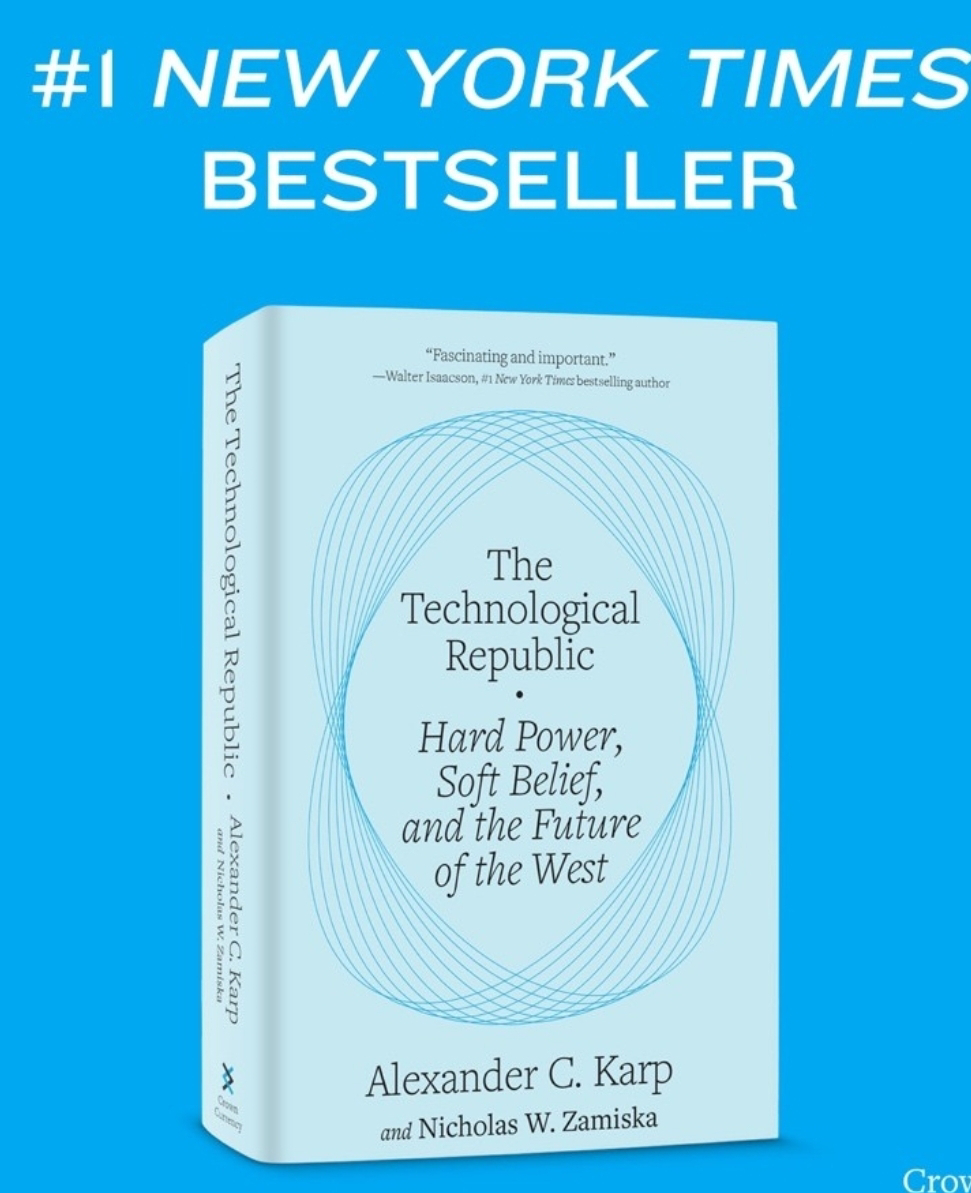
Book review: "The Technological Republic: Hard Power, Soft Belief, and the Future of the West"

Image
Book review: "The Technological Republic: Hard Power, Soft Belief, and the Future of the West" explores the complex interplay between technological advancement, societal values, and geopolitical power, particularly within the context of the Western world. It posits that the West's future hinges on its ability to navigate the challenges posed by its own technological prowess and the shifting landscape of global influence. The concept of a "Technological Republic" suggests a society deeply intertwined with technology, where technological innovation shapes not only material progress but also social structures, political discourse, and individual identities. This intertwining creates a unique form of "hard power," where technological superiority translates into military, economic, and informational dominance. The West, historically at the forefront of technological development, has leveraged this hard power to maintain its global position. Howe...

A Biblical Look at the Universe: Singularity, Stretching, and Fiery End

Image
The opening verses of Genesis and Hebrews, coupled with other biblical passages, have sparked centuries of theological and scientific debate. Genesis 1:1, "In the beginning God created the heavens and the earth," establishes a foundational premise: a divine origin for the cosmos. Hebrews 11:3, "By faith we understand that the worlds were prepared by the word of God, so that what is seen was not made out of visible things," further elaborates on this creation, suggesting that the universe emerged from an invisible, non-material source . This concept resonates with the scientific notion of a singularity . While the Bible doesn't offer a scientific explanation, it does posit a creation ex nihilo, "out of nothing," which aligns, in a sense, with the singularity's incomprehensible nature. Both concepts involve a starting point beyond our current understanding of physical laws. The " invisible singularity " implied by these verse...