Posts

Einstein's theory of Special Relativity
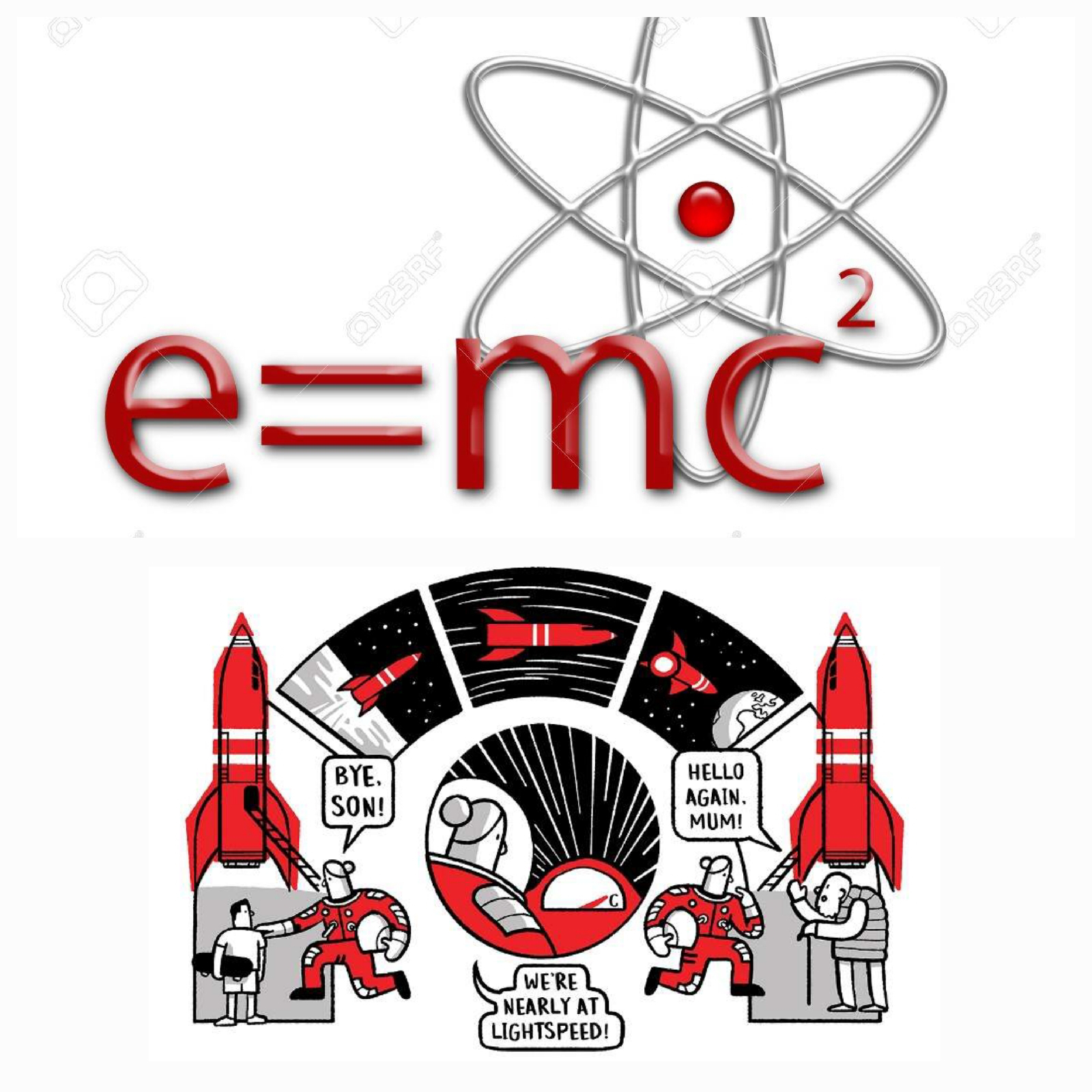
Image
Psalms 90:4 For a thousand years in Your sight Are like yesterday when it passes by, Or as a watch in the night. Jeremiah 33:25-26 Thus says the Lord, 'If My covenant for day and night stand not, and the fixed patterns of heaven and earth I have not established , then I would reject the descendants of Jacob and David My servant..” Einstein's theory of special relativity, published in 1905, revolutionized our understanding of space, time, and motion. It's built upon two fundamental postulates: The laws of physics are the same for all observers in uniform motion. The speed of light in a vacuum is the same for all observers, regardless of the motion of the light source. These seemingly simple postulates lead to profound consequences, which have been rigorously tested and confirmed by numerous experiments. Here are some of the major experiments that provide compelling evidence for special relativity: 1. The Michelson-Morley Experiment: This experiment, conducted in...

Book review: "The Technological Republic: Hard Power, Soft Belief, and the Future of the West"

Image
Book review: "The Technological Republic: Hard Power, Soft Belief, and the Future of the West" explores the complex interplay between technological advancement, societal values, and geopolitical power, particularly within the context of the Western world. It posits that the West's future hinges on its ability to navigate the challenges posed by its own technological prowess and the shifting landscape of global influence. The concept of a "Technological Republic" suggests a society deeply intertwined with technology, where technological innovation shapes not only material progress but also social structures, political discourse, and individual identities. This intertwining creates a unique form of "hard power," where technological superiority translates into military, economic, and informational dominance. The West, historically at the forefront of technological development, has leveraged this hard power to maintain its global position. Howe...

A Biblical Look at the Universe: Singularity, Stretching, and Fiery End

Image
The opening verses of Genesis and Hebrews, coupled with other biblical passages, have sparked centuries of theological and scientific debate. Genesis 1:1, "In the beginning God created the heavens and the earth," establishes a foundational premise: a divine origin for the cosmos. Hebrews 11:3, "By faith we understand that the worlds were prepared by the word of God, so that what is seen was not made out of visible things," further elaborates on this creation, suggesting that the universe emerged from an invisible, non-material source . This concept resonates with the scientific notion of a singularity . While the Bible doesn't offer a scientific explanation, it does posit a creation ex nihilo, "out of nothing," which aligns, in a sense, with the singularity's incomprehensible nature. Both concepts involve a starting point beyond our current understanding of physical laws. The " invisible singularity " implied by these verse...

Carbon dating of the Dead Sea Scrolls predate Antiochus IV Epiphanes

Image
Carbon dating of the Dead Sea Scrolls, specifically fragments of the Book of Daniel, has yielded dates that predate Antiochus IV Epiphanes, the Seleucid king whose reign and actions are central to the traditional interpretation of Daniel's visions. Here's what we know: Carbon dating results: Tests conducted on the Daniel scrolls place them generally in the 2nd century BCE, with some fragments potentially even earlier. This is significantly before Antiochus Epiphanes came to power in 175 BCE . Implications: This early dating challenges the idea that the Book of Daniel was written as a response to the Maccabean Revolt, which was sparked by Antiochus's actions. If the book or parts of it predate Antiochus, it points out a genuine fulfilled prophecy. Carbon dating provides strong evidence for an earlier date. Key points to consider: The Dead Sea Scrolls offer the oldest surviving manuscripts of the Book of Daniel. Comparing these to later versions reveals rema...

“War- What's it Good For?” -Washington

Image
"Why quit our own to stand upon foreign ground? Why, by interweaving our destiny with that of any part of Europe, entangle our peace and prosperity in the toils of European ambition, rivalship, interest, humor or caprice?" - Washington Farewell Address It's important to understand that calculating the cost of wars, especially those fought over a longer period, is a complex task. There are many factors to consider, including: Direct military spending: This includes the cost of weapons, equipment, personnel, and operations. Veterans' benefits: Healthcare, disability payments, and other benefits for veterans. Interest on debt: Wars are often financed through borrowing, which incurs interest costs. Indirect costs: Loss of life, economic disruption, environmental damage, and social costs. Here's a breakdown of the estimated costs of the wars in the last century, based on data from various sources, primarily the Congressional Research Service: World War ...